


COP 30
A collaborative visual response to the United Nations Climate Change Conference, November '25 in Brazil. This piece, created by 18 UK based artists, 2 of them from Brazil and 2 Brazilian artists living in Santos and São Paulo, both celebrates our natural environment, and expresses collective fears, making a powerful statement ahead of COP 30.
Sidmouth community concerns and care for the environment
Expressing concern and care for our planet sits behind the creation of this artwork. The call for action to tackle the local and global environmental challenges that climate change brings, and the need to speed up responses - is powerfully articulated.
Lúcia Cooper, a Sidmouth resident from Brazil asked the artists, to paint what they loved about Sidmouth and Brazil, connecting up responses through their work.
Each individual artwork, painted in acrylic, was carefully "positioned" rising from sea level to the sky and finally 'torn' like paper on a billboard, fragile and symbolic, a message to the Conference of the Parties, not to tear up treaties, or reduce targets but to unite to protect our common home.
The digital composition was created by artist and Sidmouth School of Art Trustee Sam Eyre aka digital artist Same Year.
Read more about the COP 30 project and how it is continuing through public workshops where the people of Sidmouth are invited to take part. Collectively through art, sharing their hopes, fears and calls to action, visually, to protect the environment now and in the future.
COP 30 Digital Exhibition
Each painting in the billboard artwork can be viewed as an individual piece in our digital exhibition gallery below.
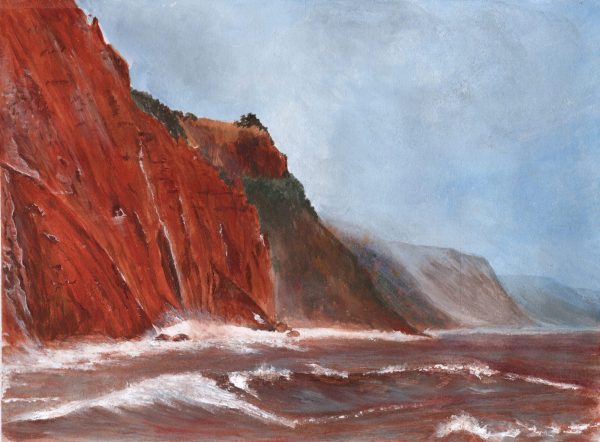
Ros Green, Hazy Days.
Sidmouth's iconic cliffs at Pennington Point to the East of Sidmouth, are well known for their rapid retreat as coastal erosion bites hard. This spot chosen by the artist, remembering childhood walks with her mother from the old bridge to Cliff Road, retains precious memories of halcyon days despite the loss of land and gardens as the cliffs fall into the sea. A reminder of what once was, as Sidmouth's iconic porous red cliffs, disappear with ever increasing high tides.
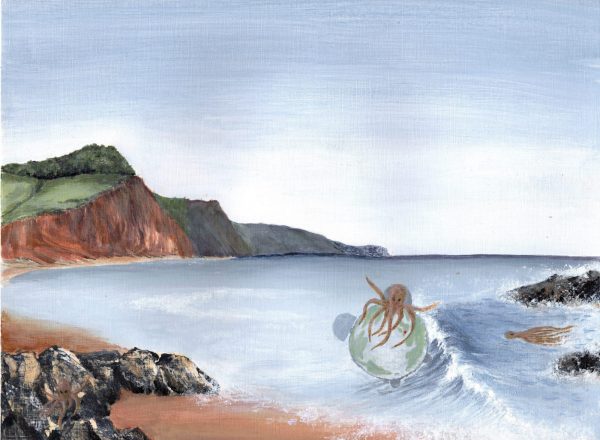
Sue McGregor, Sidmouth Sea Front.
An old style alarm clock washes in a change in our world - octopuses arriving in warming seas. A new view of Sidmouth sea front as the artist responds to the 2025 'bloom' of octopuses off the South West coast. Their significant numbers impacting the marine ecosystem and Devon's shellfish stocks. Rising sea temperatures and shifting ocean currents, make these waters more suitable for species like the common octopus. The artists' view responds to the rapid change in the species being found around Sidmouth's coast.
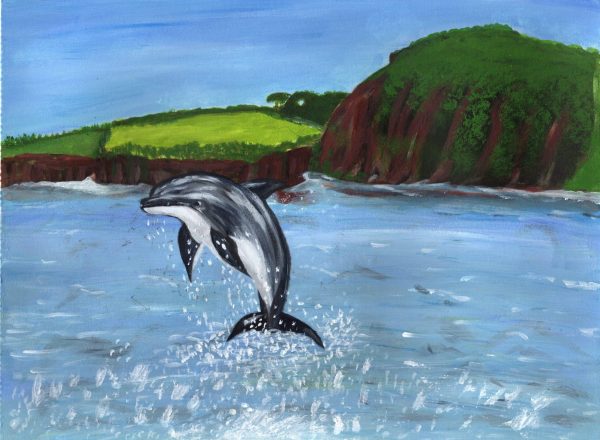
Lúcia Cooper, Dolphin.
The artists image of a dolphin jumping near Sidmouth sandstone cliffs at Jacobs Ladder Beach shares her love of these social creatures. The painting resonates as they have been sighted more frequently off the coast of Sidmouth recently, but the viewer may consider whether this is a good or bad sign for the environment, questioning whether this is due to more managed fish stocks or warming seas. The subject reminds everyone of our fragile marine ecosystem, with dolphins a crucial part of the nutrient cycle of the ocean, supporting phytoplankton, part of the food web and carbon storage.
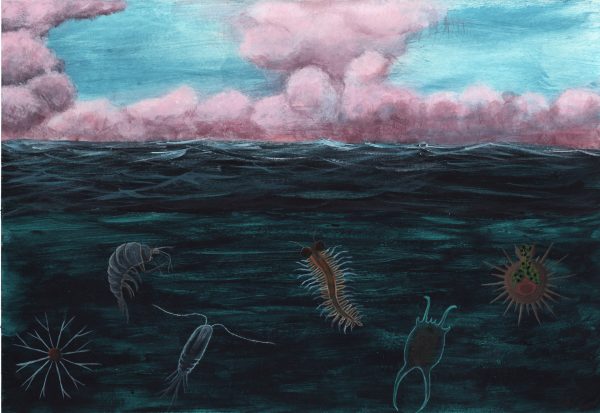
Sarah Saint, Those We Do Not Sea.
This UK artist, with a Brazilian grandparent, has a passion for the environment and studied Wildlife Ecology and Conservation Science. Different species of marine plankton in the sea with pink cumulonimbus clouds in the distance. The role of microorganisms like plankton, who are fantastic photosynthesizers, and responsible for fixing an estimated 40% of CO2 globally are given their due in this painting lest they be forgotten.
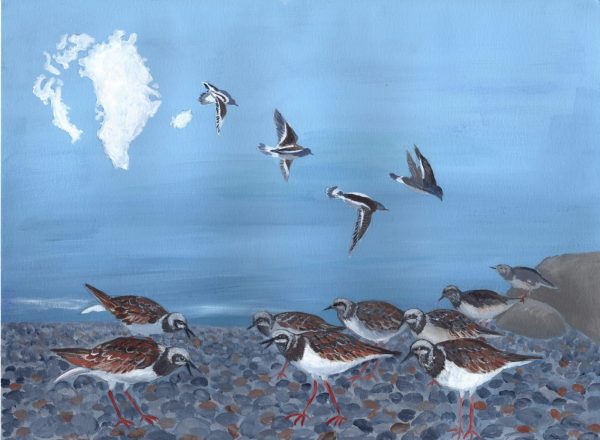
Maureen Hawkridge, Turnstones.
Turnstones on Sidmouth Beach are a sight loved by the artist, when they are visitors to Devon from their breeding ground in the Arctic region, with some continuing to Africa. The image evokes both appreciation of these small birds who fly from Greenland, and concern about the impact that climate change is having on the migratory patterns of these feathered friends.
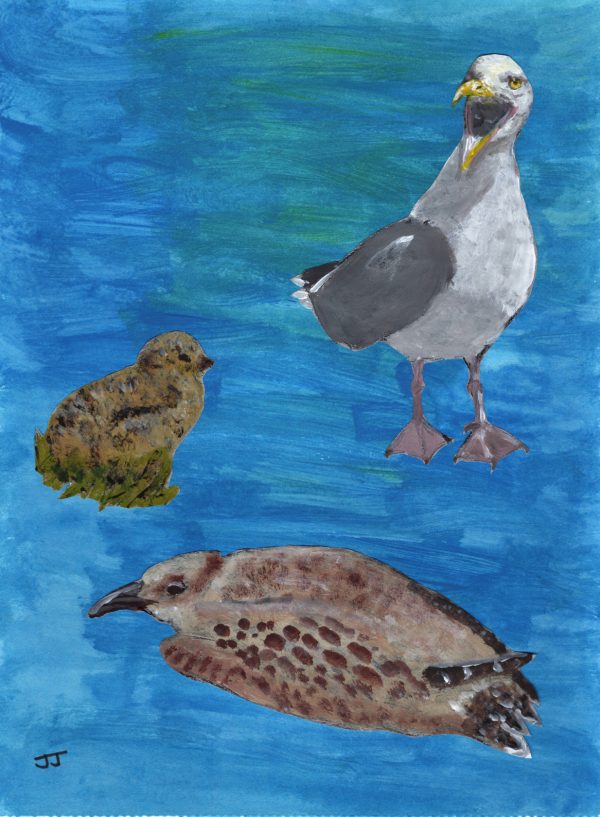
Judith Jeeves, Boisterous Locals.
Three Herring Gulls, newborn, juvenile, adult, painted in response to the "love them" or "loathe them" they can evoke locally. The artist clearly in the "love them" camp, she describes these 'red list' endangered species as 'striking beauties' who support our coastal ecosystem, scavenging and 'cleaning up'. Her visual message to share the love, despite their appetite for stealing chips and ice-cream!
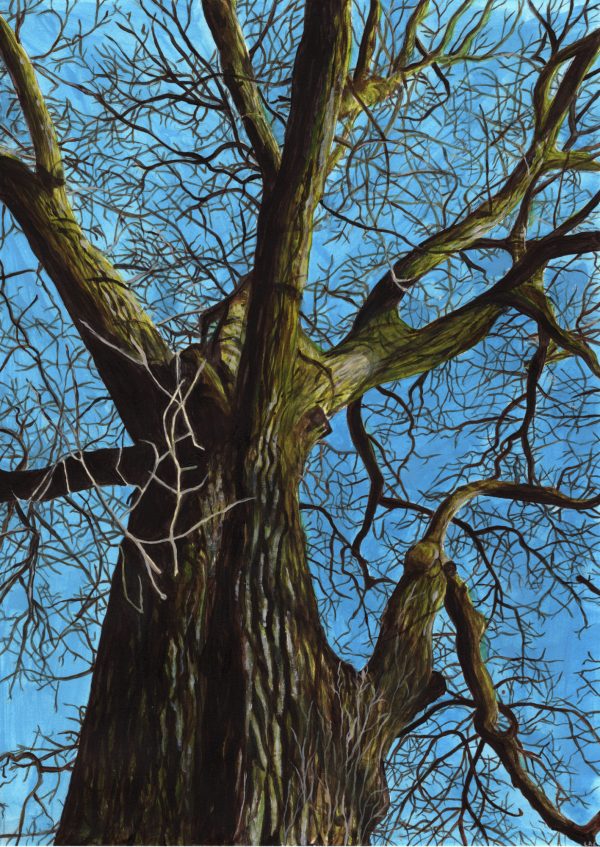
Lucy Cooper, Old Oak.
The artist has a special affinity for trees, which often appear in her work, as here where an old oak tree in early spring rises up against a bright blue sky. This oak grows close to the artists' home. Her image conveys its towering majesty. The painting shows tremendous appreciation of its 'value', ancient trees, whose ecological contribution to more than 31 different mammals from badgers to bats, over 1000 invertebrates as well as lichens, mosses and mycorrhizal (a symbiotic association between fungi and plant roots), is immense.
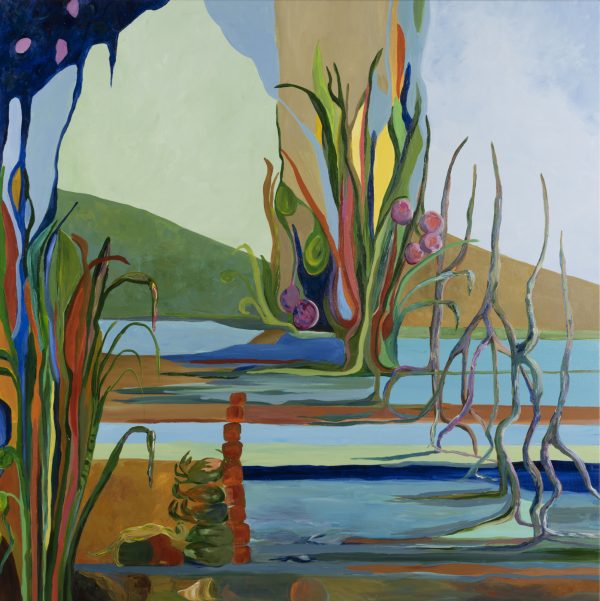
Sara Bittante, The Mangrove.
Living in Santos, the artist is inspired by her surroundings, where beaches, seas, forests and mangroves coexist. Her work, informed by memories and imagination, is situated in the threshold between the Atlantic Forest and the mangroves along the southern coast of São Paulo - a transition zone between land, freshwater, and sea. She creates hybrid beings that populate an underwater universe of water, mud, and stones. Blues and greens flow through the waters; small pink bromeliads and orange fruits sprout here and there, earthy vines dive and become roots. The mangrove is a cradle of biodiversity, the image recognizes the place as a symbolic and vital ground, where life insists, is reborn, and resists.
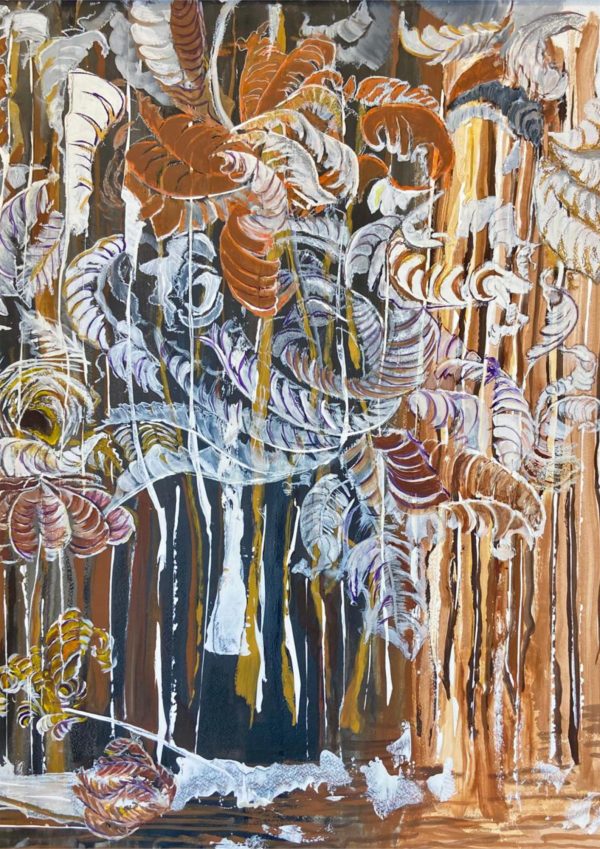
Marcia Carmona, Floresta.
The artist lives and works in São Paulo, a graduate of Industrial Design and Architecture, her work has featured in numerous exhibitions. The artist explores the Embaúba, a tree native to the Brazilian Atlantic Forest. A pioneer in the devastated areas, from the seeds of Cecropia, the Embaúbas establish themselves in open, degraded, inhospitable areas and grow voraciously. The artist depicts, in colours that evoke a sense of decay, a symbol of nature's resilience, as this tree decomposes rapidly, returning nutrients to the soil.
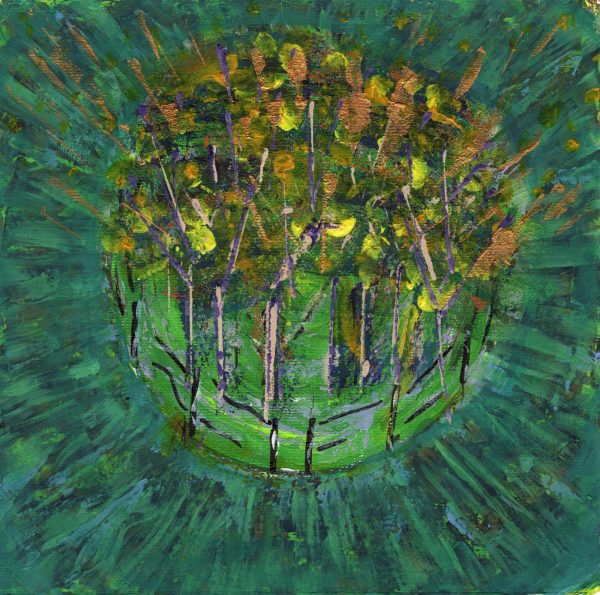
Martin Scott, Golden Copse.
The golden copse in Margaret's Meadow, a place celebrated through the artists rendering of this favourite spot. Its golden glow and energy captured in colour and brush work, reminds us of its vitality.
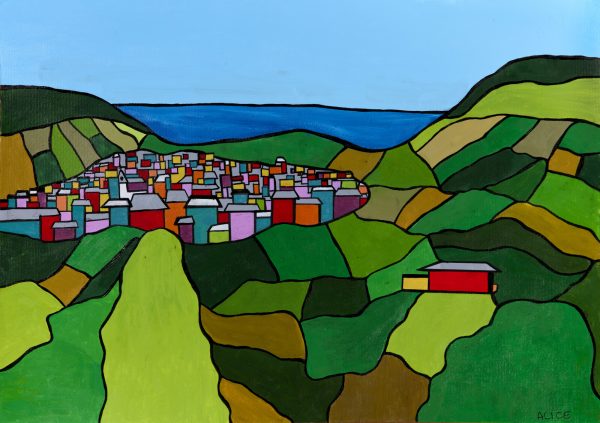
Alice Chatwin, Sidmouth From Fire Beacon Hill.
Alice is a Sidmouth resident also from Brazil, who grew up in São Paulo, and is drawn to Rio with its vibrant culture of art and music. Her image shows how nature is wrapped around Sidmouth though threatened by rising sea levels and the risk of flooding. Her work here is in the style of Arte Naive, characterised by simplicity, bright colours, distorted perspectives and symbolic depth expressing emotions and personal experiences. Alice, at 19 is the youngest participating artist. Her work depicts the view across the Sid Valley with Sidmouth bordered by the sea.
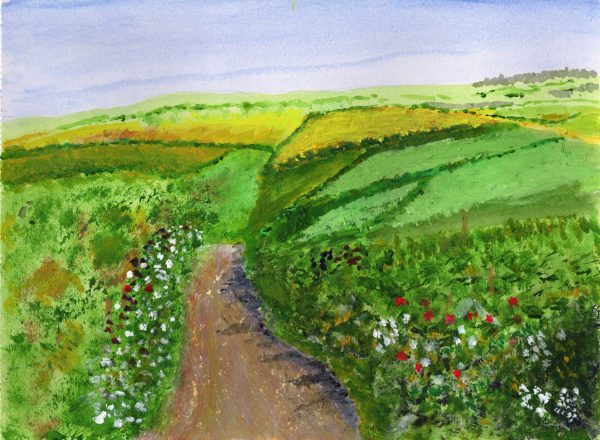
Fergus Cooper, Hedges.
The artist reflects on the importance of hedgerows through this painting. Though not natural structures, hedges offer protection and shelter for animals, flowers and insects and require us to care and maintain them for biodiversity to thrive.
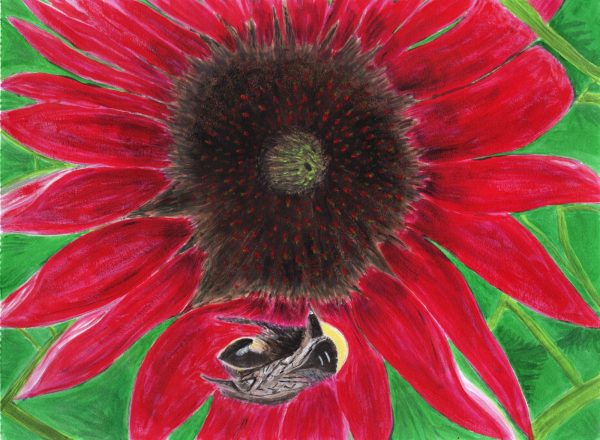
Barb Playford, Bee With Flower.
The artist loves to sit in the garden and watch them working with their joyful sound. Her work recognises that bees are essential, when they go they take us with them.
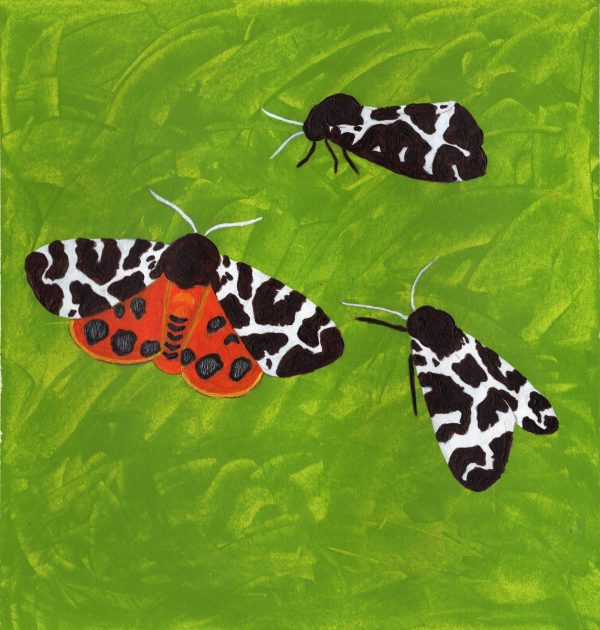
Jenny Roberts, Garden Tiger Moth.
3 Tiger Moths, one with open wings, their numbers have been decreasing since the 1970's and more significantly since the 1980's. Through recording them in this painting the artist is highlighting the impact of climate change, with adult Tiger moths declining due to mild, wet Januarys followed by colder weather in February.
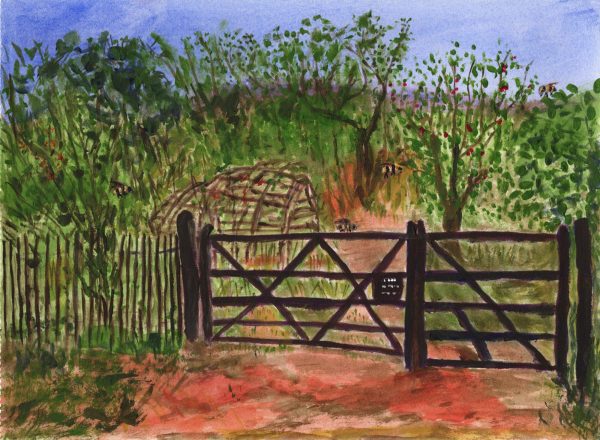
Judi Butler, Community Orchard.
Sidmouth Community Orchard in the Byes is an area where local group Friends of the Byes created this place for nature and for learning and education, planting and enriching insect species. The artist recognises through this painting, the power of local action, responsibility and volunteering to protect nature.
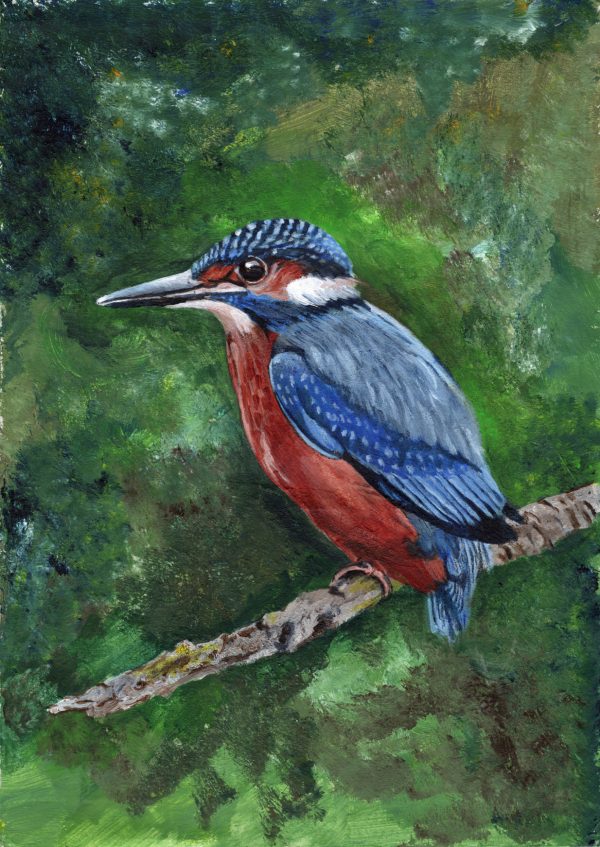
Chris Powell, Kingfisher.
Inspired by a flash of iridescent blue sometimes spotted on the artists' walk through the Byes in Sidmouth, as a Kingfisher flashes by. The image of a Kingfisher on a branch reminds us that disruptions in habitat due to climate change and flood risks, can have a significant impact on the local Kingfisher population.
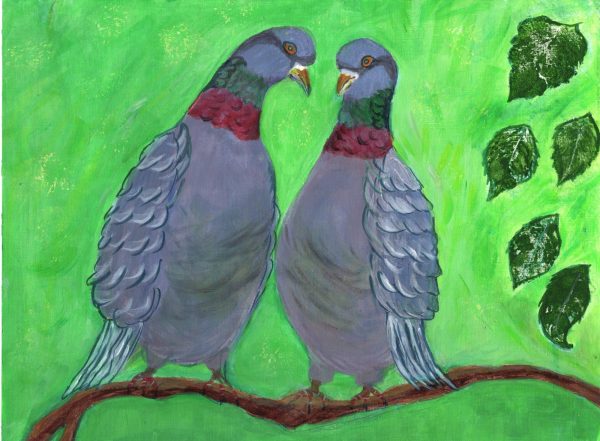
Alice Klein, Peaceful Wood Pigeons.
The highly intelligent wood pigeons who have nested in her garden for years are the artists' focus. Peaceful and loving she has grown to love them, a representation valuing the species that share our habitat.
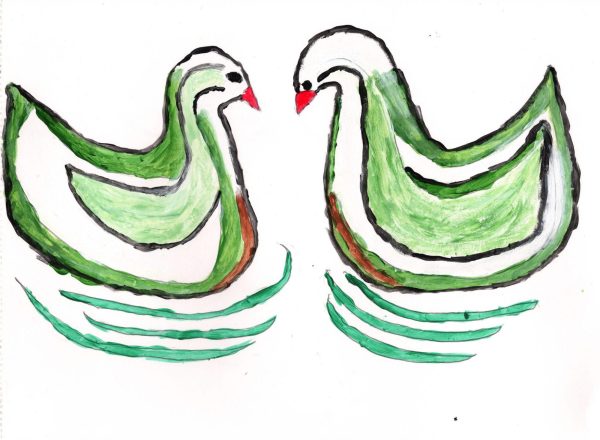
Helen Goodman-Payne, Swan.
This painted pair of swans responds the artists own valuing of wildlife, here symbolising grace. In response to climate change challenges the artist ponders on our "Willingness to surrender to whatever lies ahead".
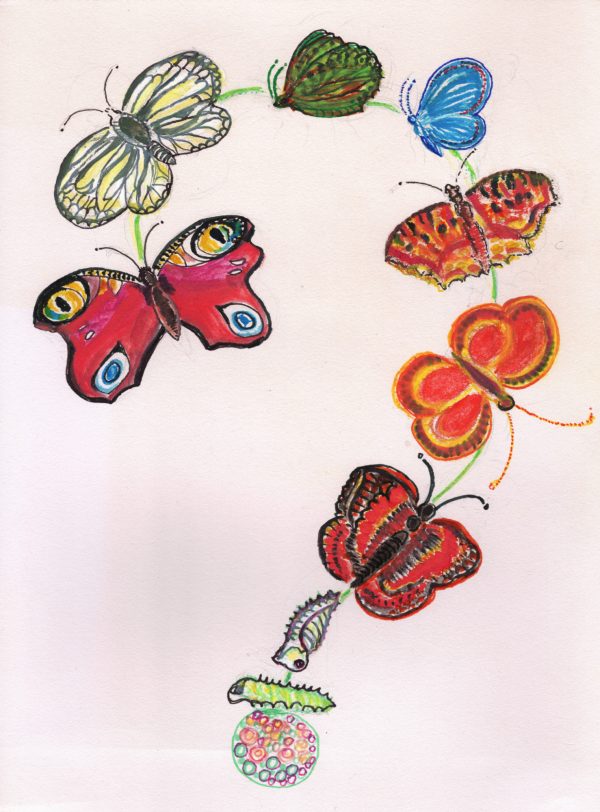
Kath Brennan, Where Have All The Butterflies Gone?
The spiral of butterflies shows 7 different species; Peacock, Marbled White, Small Blue, Comma, Common Blue, Spotted Fritillary, Red Admiral, and their transformation process from Caterpillar and Chrysalis. The question mark formation prompts the viewer to ask where have all the butterflies gone? responding to their decline due to climate change.
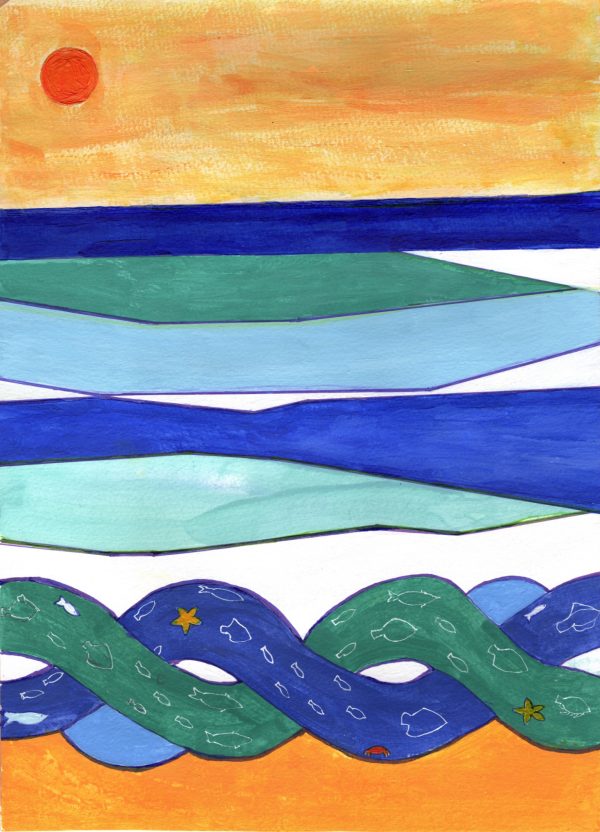
Linda Funnell, Seas The Day.
The artists' love of the sea and the path of destruction to the lifeforms it hosts is the subject. The hot red sun, ice melts and sea rises are layered to show their interconnectedness and the climate changes that affect all marine life.